
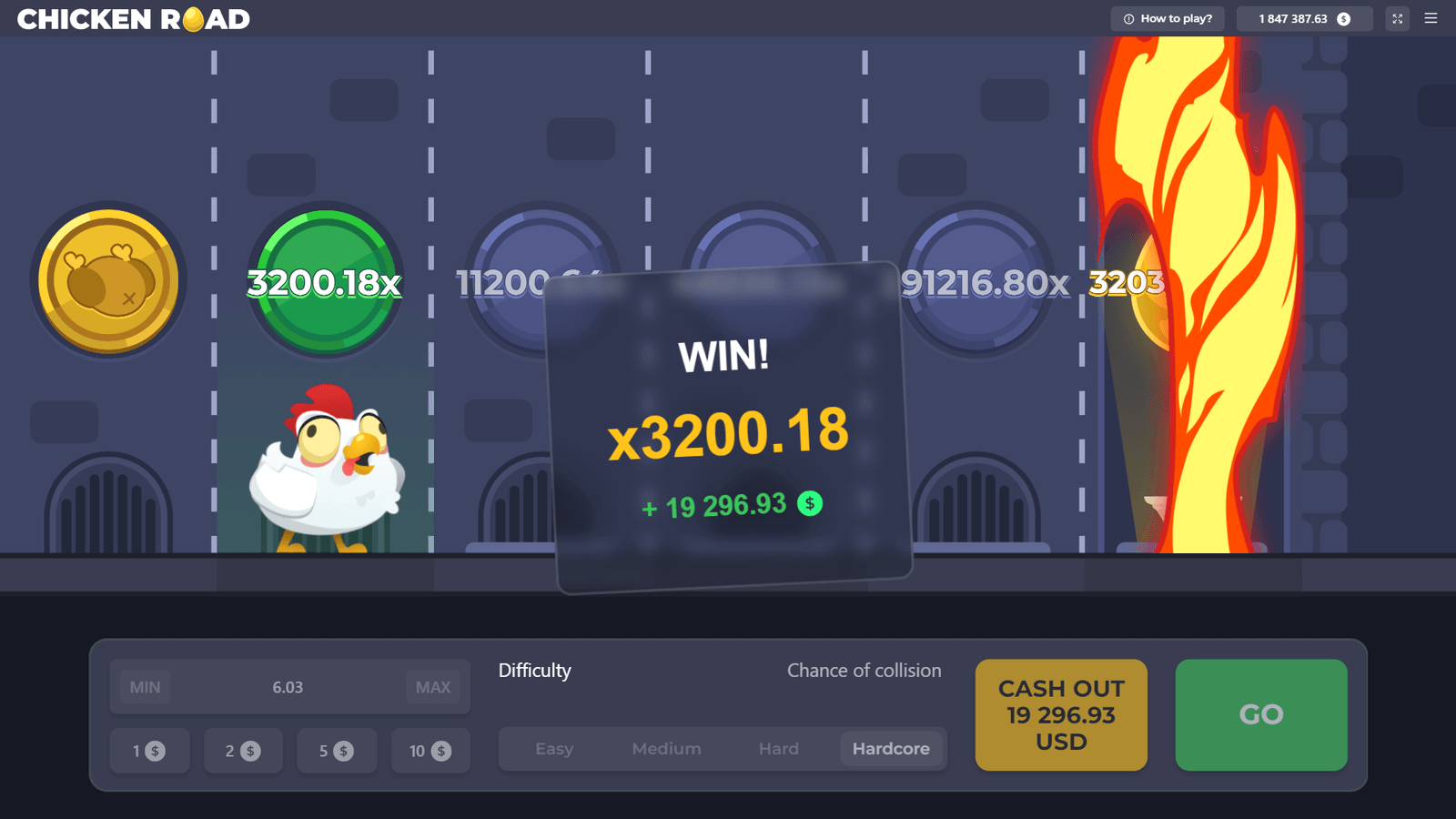
I’ve spent countless spins investigating bonus rounds, and few features catch my attention as consistently as the Hold and Win feature. It converts a regular slot grid into a tense, prize-collecting mini-game where every new symbol can renew the clock and boost the payout. Chicken Road apk downloaden, a farmyard-themed video slot, uses this mechanic as its centrepiece, encasing it in cheerful visuals and straightforward base gameplay. In this article I break down exactly how Hold and Win operates in this game, what you can anticipate from the RTP and volatility, how the reels and paylines are arranged, and which other bonus features support the main event. I also go over the bet range, the maximum win potential, and a practical guide to getting started, so you can tackle the game with a clear head and a solid grasp of what makes the mechanic tick.
Stake Options and Maximum Win Potential
The wager limits in Chicken Road is structured to serve a broad range of players. You can usually set your total stake from as low as 0.20 per spin up to 100.00 per spin, based on the casino’s configuration. The game employs a easy-to-use bet selector with plus and minus buttons, and the active stake is shown clearly at the bottom of the screen. Because the paylines are fixed, your chosen stake is split evenly across the 25 lines, and all paytable values adjust accordingly. This enables you to transition between cautious and more aggressive bet sizes without recomputing anything.
The maximum win is set at 5,000 times your stake, and the most trustworthy way to get near that maximum is through the Hold and Win feature. Filling the whole board with golden eggs awards the Grand jackpot, which, combined with the gathered cash totals, can reach the 5,000x limit. Even if you miss filling the grid, hitting the Major jackpot alongside several high-value eggs can yield wins in the 500x to 1,000x range. For a 1.00 bet, that equates to a potential top prize of 5,000, and for a 100.00 bet, the ceiling goes up to 500,000, though such scenarios are very uncommon. I strongly suggest reviewing the game’s paytable and rules screen to confirm the precise limit, as it may differ a bit between different versions.
Playing Chicken Road: A Step-by-Step Guide
Starting with Chicken Road is straightforward, but a few deliberate steps can help you avoid confusion and play with confidence. The interface is clean, with all key controls grouped at the bottom of the screen. Before your first ca.wikipedia.org spin, I suggest opening the paytable by clicking the « i » or menu button. There you can find the symbol values, payline patterns, and a concise explanation of the Hold and Win rules, the free spins trigger, and the jackpot tiers. Familiarising yourself with the bonus symbol and scatter symbol appearances will make it easier to recognise feature triggers as they happen.
Once you feel comfortable with the paytable, follow this sequence to begin playing:
- Use the bet selector to set your total stake per spin. The display shows the amount in your chosen currency, and you can adjust it in predefined steps.
- Click the spin button to activate the reels. You can also utilize the autoplay function if you desire a set number of automatic spins, but I advise setting loss and win limits within the autoplay menu.
- Look for golden egg bonus symbols. If six or more show up, the Hold and Win feature begins immediately.
- During the Hold and Win round, no input is needed. The respins proceed automatically, and you simply watch as new symbols lock and the counter restarts.
- If three or more scatter symbols land, the free spins feature starts. Pay attention to the multiplier meter, which can increase wins significantly.
- After any feature concludes, your total win is deposited to your balance, and you head back to the base game.
Since the game’s volatility is medium-to-high, I deem it wise to set a session budget and choose a bet size that allows for at least 100 spins. This gives you a reasonable chance of activating the Hold and Win feature at least once, which is where the game’s personality and payout potential truly stand out.
After spending serious time with Chicken Road, I’m convinced that the Hold and Win mechanic is what elevates it from a enjoyable farmyard slot into something truly gripping. The blend of sticky symbols, resetting respins, and four jackpot tiers creates a bonus round that seems both fair and thrilling. The base game offers enough small wins and free spin triggers to keep the balance ticking over, but the real reason to play is the excitement of seeing those golden eggs fill the screen. If you want to grasp the mechanic before risking real money, I advise trying the demo version first. That way you can watch the respins reset, track how often the Major and Grand jackpots appear, and determine whether the volatility matches your style. When you do play for real, set a limit, stick to it, and let the chickens do the rest.
The way Hold and Win Operates within Chicken Road
Initiating the Feature
Within Chicken Road, the Hold and Win bonus starts when six or more special bonus symbols land in any position on the reels during a one base game spin. These symbols resemble golden eggs carrying cash values or jackpot labels, and they stand out against the farmyard backdrop. Once the feature starts, all regular symbols vanish, and only the triggering bonus symbols remain locked in their positions. The game then awards three respins, and the grid effectively becomes a blank canvas expecting more golden eggs to appear.
Extra Spins and Sticky Symbols
During the respin sequence, only bonus symbols and empty spaces appear on the reels. Every time a new golden egg lands, it secures in place and the respin counter goes back to three. This means the feature can persist for many spins as long as you maintain fresh symbols. I’ve observed rounds where just one or two additional eggs show up, and others where the grid becomes full almost completely, each new symbol resetting the clock and increasing the tension. The mechanic pays off for patience, and the sound of the counter resetting is a small but impactful piece of feedback that keeps you engaged.
Jackpot Prize Prizes
The golden eggs contain individual cash values based on your current bet, but some display jackpot names: Mini, Minor, Major, and Grand. The Mini, Minor, and Major jackpots give fixed multiples of your stake, while the Grand jackpot is reserved for the ultimate achievement—filling all 15 positions on the 5×3 grid with bonus symbols. When that occurs, the Grand jackpot is added to the total of all other locked values, resulting in the game’s maximum payout. Even without hitting the Grand, collecting several high-value eggs and the Major jackpot can yield a win https://www.thestar.com/sports/sports-betting/canada-vs-pakistan-t20-world-cup-cricket-odds-canadians-are-heavy-underdogs-in-a-must/article_a8d72077-1bc7-511e-829d-43d4ec12fb2c.html that surpasses what the base game normally delivers.
Exploring Hold and Win Features?
Hold and Win is a bonus feature present in many modern video slots that secures special symbols in place and grants a set of respins. When enough triggering symbols show up during the base game, the regular symbols vanish, leaving only the special prize symbols on the grid. You receive a fixed number of respins, typically three, and each time a new prize symbol appears, it sticks to the reels and resets the respin counter back to its starting value. The round finishes when you exhaust respins or cover every position on the grid, at which point the total value of all locked symbols gets awarded.
What keeps the mechanic so engaging is the blend of sticky symbols and the resetting counter. Unlike a standard free spins round where outcomes are independent, every respin in Hold and Win directly impacts your final prize. A single new symbol can add a substantial cash amount or even a jackpot label, and because it renews the count, it extends the feature and builds anticipation. The mechanic often includes fixed jackpot tiers—Mini, Minor, Major, and Grand—that can be achieved by landing the corresponding symbol or by filling the entire grid. In Chicken Road, this structure is used to deliver the game’s biggest payouts, and I believe that the visual and audio feedback during the respins creates the experience feel immediate and rewarding.
Hold and Win rounds typically don’t require any decision-making beyond the initial spin that triggers them, which appeals to players who prefer watching the action unfold. The mechanic lies in a sweet spot between simple pick-and-click bonuses and complex multi-level features. It’s straightforward: you see exactly which symbols are locked and what each one is worth, and the resetting respins establish a clear path to the top prize. For anyone trying Chicken Road for the first time, understanding this core loop is the key to appreciating why the game plays the way it does.
The Concept and Visual Design of Chicken Road
Chicken Road embraces a cheerful farmyard theme that establishes a light tone. The reels are placed against a dusty country lane with a wood fence, a barn in the distance, and a vibrant blue sky. The main character is a plucky cartoon chicken who periodically moves across the screen, and the symbols support the theme: a rooster, a hen, a tractor, a sack of corn, and a wooden signpost. Even the low-paying card suit symbols are crafted with straw and feather patterns, so nothing feels out of place. The color scheme is warm and saturated, which makes the game visually inviting without becoming overwhelming.
The audio matches the theme with a banjo-driven soundtrack, clucking sounds when winning spins land, and a lively melody that begins during the Hold and Win feature. When the bonus starts, the music changes to a more tense rhythm, and each golden egg that holds is followed by a solid thud. These details matter because they reinforce the game’s flow: the repeating respins feel more dramatic when the sound design emphasizes every locked symbol. I think that the overall presentation enables the Hold and Win round feel like a distinct event rather than just an addition on the base game, which is exactly what a good bonus feature should do.
Reels and Payout Lines: The Base Game Layout
Chicken Road uses a classic 5-reel, 3-row grid with 25 predetermined paylines. Wins are formed by getting matching symbols on neighbouring reels from left to right, starting from the first reel. Because the paylines are fixed, you can’t change the quantity of active lines; every spin covers all 25, which streamlines bet choice and assures you don’t ever miss a victorious pattern due to an disabled line. The paytable is separated between top-tier thematic symbols and lesser card ranks, with the rooster and hen providing the largest base game prizes for five-of-a-kind sets.
The wild symbol shows up as a bright « Chicken Road » logo and replaces for all regular scoring symbols aside from the scatter and the Hold and Win bonus symbols. Wilds can appear on reels two, three, and four, assisting to fill spaces in normally incomplete paylines. The scatter symbol, depicted as a wooden road sign, pays out in any position and is the key to triggering the free spins round. While the base game can deliver steady, average wins, the actual thrill arises from landing six or more bonus symbols, which is why I constantly hold an eye on the golden eggs as they fall onto the grid.
Extra Features Beyond Hold and Win: Free Spins, Wild Icons, and Scatters
While the Hold and Win round is the main event, Chicken Road features a free spins bonus that adds variety and extra winning chances. Hitting three, four, or five scatter symbols anywhere on the reels grants 10, 15, or 20 free spins respectively. During the free spins, a win multiplier is in effect, often starting at 2x and growing with each consecutive win or with special multiplier symbols that can land on the reels. The free spins round can also be triggered again by hitting additional scatters, which prolongs the feature and holds the multiplier climbing.
Wild symbols remain active during free spins and keep to replace for regular symbols, assisting to form higher-paying combinations. The Hold and Win feature can still activate from within the free spins round. When that takes place, the free spins pause, the Hold and Win bonus unfolds on a fresh grid, and once it ends, the free spins resume from where they left off. This stacking of features implies that a single free spins session can contain multiple bonus activations, and I’ve seen rounds where a Hold and Win activation inside free spins gave a payout that dwarfed the base game trigger. The scatter symbol itself also awards a small instant prize when it lands, so even if you don’t reach the required three scatters, you still get a minor consolation.
RTP and Volatility: What to Look For
The return to player of Chicken Road sits around 96.0%, which is a common number for current video slots with a Hold and Win mechanic. This figure indicates the expected long-term payout, and it signifies that for every 100 units wagered, the game is structured to pay back about 96 units over an long period. Of course, separate sessions can differ wildly, and the RTP alone doesn’t tell you how often wins hit or how big they are. For that, you must comprehend the volatility.

Chicken Road runs at a medium-to-high volatility level. In realistic terms, this signifies the base game is inclined to provide smaller, less frequent wins, while the bonus elements—especially the Hold and Win round—possess the potential for much greater payouts. I’ve encountered sequences of 20 or 30 spins with only limited returns, then a single feature start that brings back the balance and drives it into profit. The hit ratio, which is the share of spins that produce any win, probably sits around 25%, so you should prepare for dry spells. This volatility pattern fits players who are comfortable with some risk and who recognize that the game’s structure funnels a considerable part of its payout potential into the sticky-symbol bonus round.
Common Questions
What exactly is the Hold and Win feature in Chicken Road?
It represents a bonus round initiated by landing six or more golden egg symbols. The triggering symbols remain locked, and you receive three respins. Every new golden egg that lands also remains and resets the respin count to three. The round finishes when no respins remain or the grid is full, and you win the total value of all locked symbols.
How can I activate the Hold and Win feature?
You require six or more bonus symbols anywhere on the reels during a single base game spin. These symbols are easy to spot because they display cash values or jackpot labels. The feature can also trigger during the free spins round, which adds an extra layer of opportunity when scatters land.
Can I retrigger the Hold and Win round once it starts?
There is no additional retrigger feature inside the Hold and Win round. Instead, every new sticky symbol that lands automatically restarts the respin counter to three, effectively lengthening the feature. The round continues as long as new golden eggs appear before the counter reaches zero.
What is the maximum win in Chicken Road?
The game sets the maximum payout at 5,000 times your total stake. The most direct path to this prize is covering all 15 grid positions with bonus symbols during the Hold and Win feature, which awards the Grand jackpot plus the sum of all other locked values. Always review the in-game paytable for the exact cap.
What are the RTP and how volatile is the game?
Chicken Road has a theoretical RTP of approximately 96.0%, which is standard for slots with this mechanic. The volatility sits in the medium-to-high range, meaning wins can be rare in the base game but the Hold and Win feature can offer substantial payouts that make up for dry spells.
Can I use a strategy to improve my chances in Hold and Win?
The outcome is determined by a random number generator, so no betting pattern can change when the feature triggers or which symbols land. The best approach is to control your bankroll, choose a bet size that allows many spins, and become familiar with the feature by playing the demo mode first.